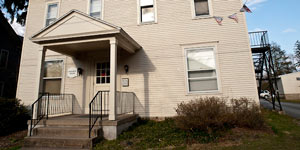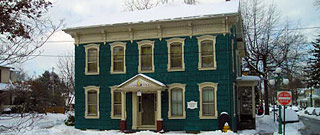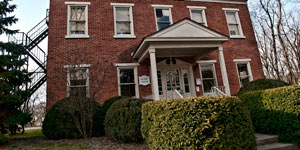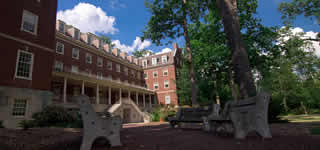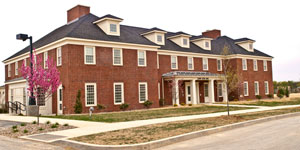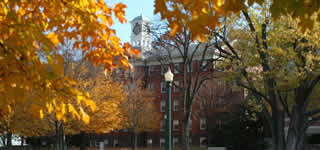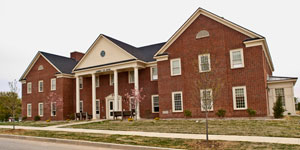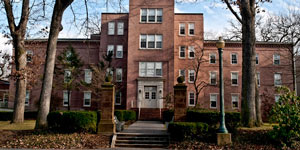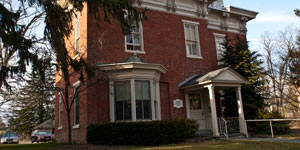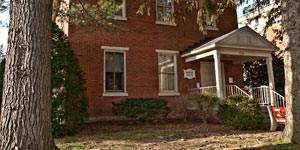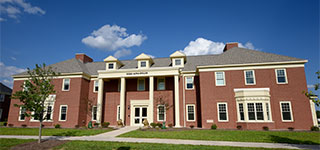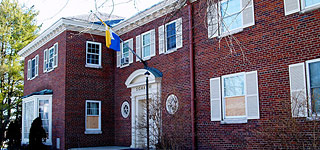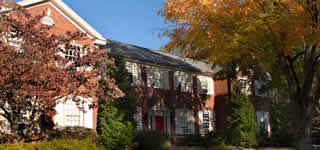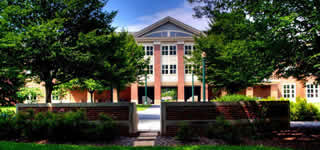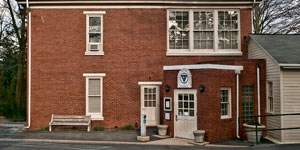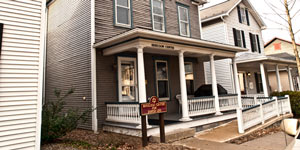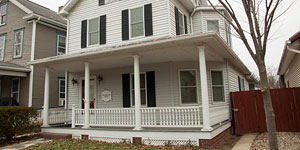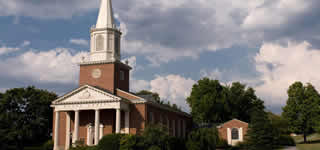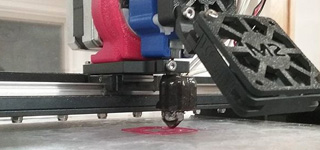
The 7th Street Studio is a creative workspace open to students, faculty and staff throughout the academic year. It consists of a Studio as well as a MakerSpace annex. Together, these two areas are equipped with a wide range of traditional and modern tools.
]]>
]]>
]]>
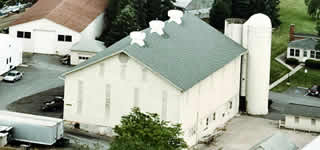
The Art Barn, a converted dairy barn on the west campus, provides more than 10,000 square feet of classrooms and workshop space for Bucknell students.
]]>
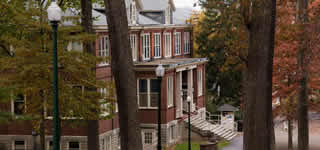
The Art Building, built in 1890, provides classrooms and studios for art students.
]]>
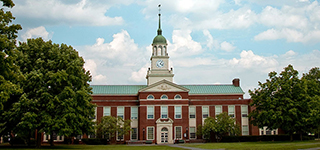
The Ellen Clarke Bertrand Library (built in 1951) is the center of information services for the campus. Located in one of the landmark buildings at Bucknell, the library is a leader among peer institutions in providing access to print and digital information. The Information Commons on the first floor provides students with one location to get assistance. The library also houses the Teaching & Learning Center, The Office of Civic Engagement and the Digital Communications Center.
]]>
The Biology Building, completed in the fall of 1991, houses faculty offices and research laboratories as well as a variety of laboratories designed for use by both non-majors and majors, and a rooftop greenhouse.
]]>
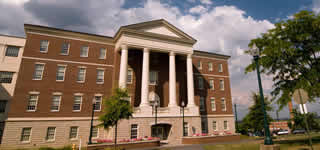
Opened in 2004, this $8 million facility, which complements Dana Engineering, is named for trustee and lead donor, Lauren P. Breakiron, from the class of 1952, and his wife Margit. The modern structure, complete with state-of-the-art technology, covers 38,000 square feet and brings much-needed lab, classroom, and office space to the benefit of all of the engineering programs. Whereas Dana provided only 130 square feet of space per student, the College of Engineering now enjoys 200 square feet per student.
]]>
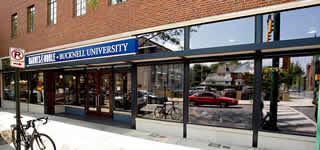
The Bucknell University bookstore, which occupies the former C. Dreisbach's Sons Hardware Store on the northwest corner of Fourth and Market streets, includes a large inventory of books, magazines and sportswear, as well as a Starbucks café. Its regular hours are 9 a.m. to 9 p.m. Monday through Saturday and noon to 5 p.m. on Sundays.
]]>
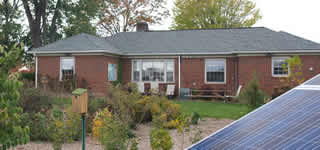
The Bucknell Center for Sustainability and the Environment (BSCE) supports faculty, staff, and students dedicated to environmental and nature-related learning, teaching, scholarship, service, and action at local, regional, national, and international levels.
]]>
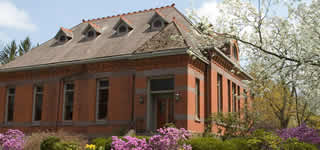
Bucknell Hall, dedicated in 1886, was renovated in 1988 for use as a poetry center and recital hall. It houses the Stadler Center for Poetry, named for benefactors Jack Stadler ('40) and his wife, Ralynn.
]]>
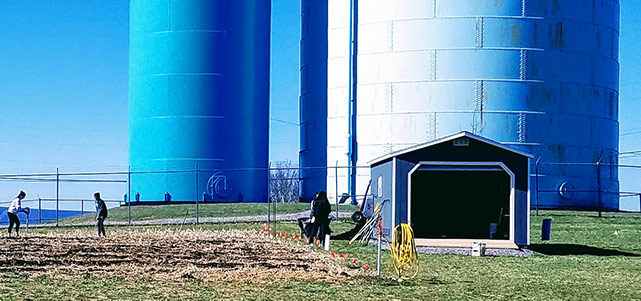
Bucknell's 5-acre campus farm provides fertile ground for academic connections, sustainable food production, student life and wellness, and community engagement. The main entrance is a walking path located on South Campus Drive across from the Observatory.
]]>
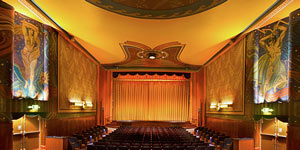
Opened in 1941 and one of only a few remaining active art deco theaters, the Campus Theatre shows contemporary films, hosts various festivals, and provides a unique setting for classroom video showings. Visit the Campus Theatre web site for showtimes and more information.
]]>
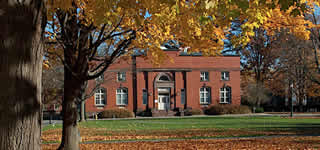
Constructed in 1905 under a grant from Andrew Carnegie, this building originally served as the library of the University. It now houses the Writing Center, the Teaching & Learning Center, the Griot Center for Africana Studies, the Office of Accessibility Resources and the Department of Geology.
]]>
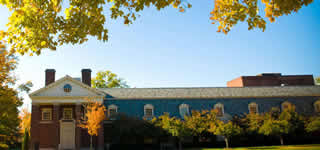
William H. Coleman Hall, dedicated in 1959, was a gift of the F.W. Olin Foundation, and is named in honor of the late Dr. Coleman, who served Bucknell for more than 30 years as a professor of English, dean of the university, and vice president. It houses classrooms, faculty offices, several lecture halls, a number of laboratories and seminar rooms, and the 500-seat theatre equipped for work in the dramatic arts. Renovated in 1996, the theatre was renamed the Harvey M. Powers Theatre in 1997.
]]>
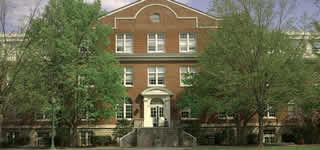
The Charles A. Dana Engineering Building is named for a generous benefactor in recognition of his support of engineering and scientific education. Begun in 1921 and completed in 1940, it houses the College of Engineering and provides the many laboratories and classrooms essential to the university's engineering program. A $4 million renovation and expansion of the building was completed in June 1985.
]]>
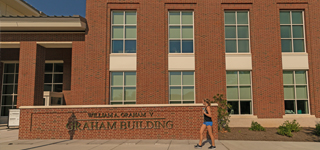
Opened in 2016, this 36,000-square-foot addition to the Bucknell University campus provides a new home for student health, wellness and counseling services, the Athletic Leadership Academy, and a world-class wrestling training facility.
]]>
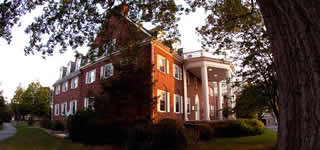
Hildreth-Mirza Hall is a hub for humanities offices and initiatives at Bucknell, including the Humanities Center, the Bucknell University Press and the Griot Institute for Africana Studies. It houses a library, the Great Room hearth and event space, five conference rooms and a kitchen.
]]>
Management at Bucknell is undergoing historic changes. Our 2017 elevation from a school to a college was quickly followed by an investment of more than $25 million by Kenneth '72 and Janice Freeman, who believe strongly in Bucknell's potential to achieve an even stronger position as a leader in business education. Today, the newly christened Kenneth W. Freeman College of Management is uniquely positioned to enhance our already groundbreaking experiential learning opportunities, deepen our connection to the liberal arts and prepare students who are even better poised to achieve and lead across the full range of human endeavors.
]]>
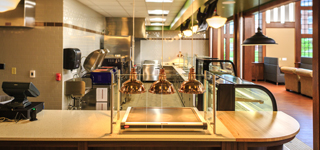
The social hub of South Campus, MacDonald Commons offers students numerous engagement opportunities, including a multipurpose room, lounges and an a la carte restaurant.
]]>
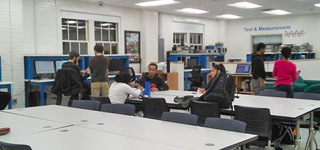
The Maker-E is a creative space for learning about and working on electronics, programming, and similar projects. Located in room 111 of Dana Engineering, this MakerSpace is open to all students, faculty and staff throughout the academic year.
]]>
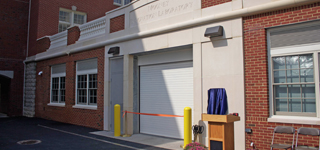
The Mooney Lab is a 2,200-square-foot space in the basement of the Dana Engineering building that includes a large project development area, laser cutter, design studio and manufacturing space for welding, grinding and brazing.
]]>
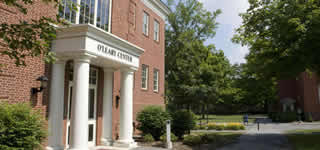
The O'Leary Center houses the departments of geology and psychology.
]]>
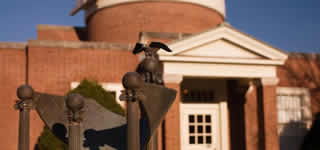
The Observatory, constructed in 1963 to replace an earlier one which had been a gift of William Bucknell, includes laboratories and an outdoor deck for astronomical research.
]]>
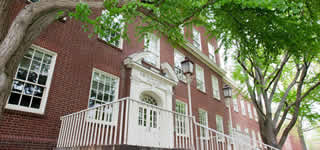
Funds for the construction in 1955 of the F.W. Olin Science Building came from the F.W. Olin Foundation. Renovated in 1989-90, it houses the departments of physics, mathematics, and education.
]]>
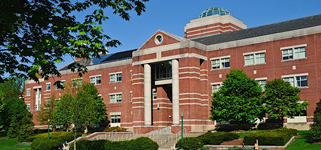
Named for Robert Rooke ('13) in 1991, the Rooke Chemistry Building contains classroom and seminar rooms, faculty offices, and modern laboratories for faculty and students.
]]>
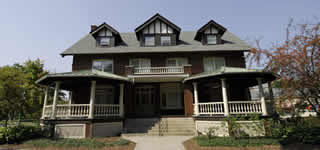
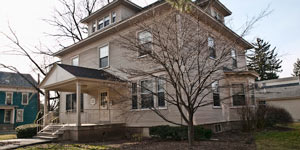
Seventh Street House is the African American and Caribbean Studies House.
]]>
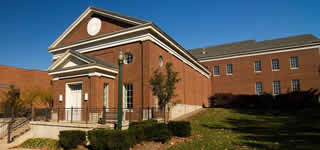
The Sigfried Weis Music Building, located next to the Weis Center for the Performing Arts, was completed in fall 2000 and houses classrooms, faculty offices, a computerized keyboard lab, practice rooms, a music library, and a 176-seat recital hall. It is named for Sigfried Weis, former chairman of the Bucknell Board of Trustees.
]]>
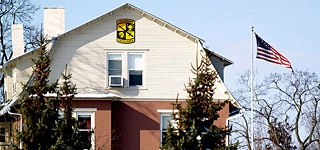
Bucknell's ROTC program is located in the Spratt House.
]]>
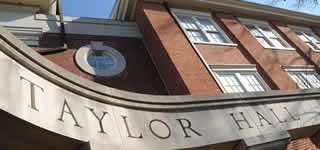
Stephen W. Taylor Hall, named in honor of the author of the University's charter, was erected in 1849 as the first building on College Hill. In 1994, Taylor Hall was renovated for use by the School of Management and the Bucknell University Press.
]]>
The 450-seat Leanne Freas Trout Auditorium in the Vaughan Literature Building was recently restored to its original grandeur. In 2003 it was dedicated in honor of Leanne Freas Trout, Class of 1950, for the years of loyalty, service, time and leadership she and her family have devoted to Bucknell.
]]>
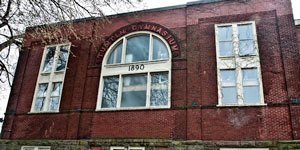
The Tustin Building, which was used for many years as a gymnasium, is named in honor of Francis W. Tustin, Class of 1856, who later became a member of the faculty. Dedicated in 1890, the building was completely remodeled and equipped in 1938, and in 1961 a wing was added. Tustin is used for academic and extracurricular programs. In 1986 the flexible black box Tustin Studio Theatre was opened.
]]>
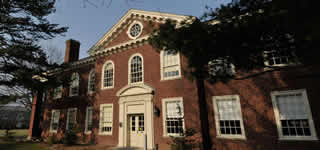
The Charles P. Vaughan Literature Building, which holds a 450-seat auditorium, classrooms, and offices for faculty, was completed in 1938 and named in honor of Charles P. Vaughan, a trustee who also served, in 1931, as acting president.
]]>
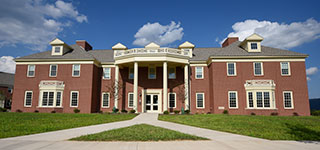
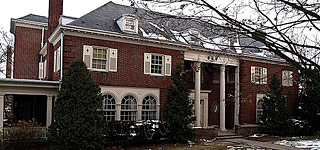
Opened in 2017, the affinity house at 125 Strohecker Farm Lane provides housing for 26 students in single-occupancy rooms. The building is LEED Silver certified for sustainable design and resource efficiency.
]]>
This is a residence hall for upper class students.
]]>
The 7th Street Studio is a creative workspace open to students, faculty and staff throughout the academic year. It consists of a Studio as well as a MakerSpace annex. Together, these two areas are equipped with a wide range of traditional and modern tools.
]]>
Student Housing
]]>
Bison Bikes is a free, community based, bike-sharing program and learning lab, aimed at providing an alternative mode of transportation for the Bucknell undergraduate community, limiting the environmental impact of student transportation, and increasing the availability of transportation on campus.
]]>
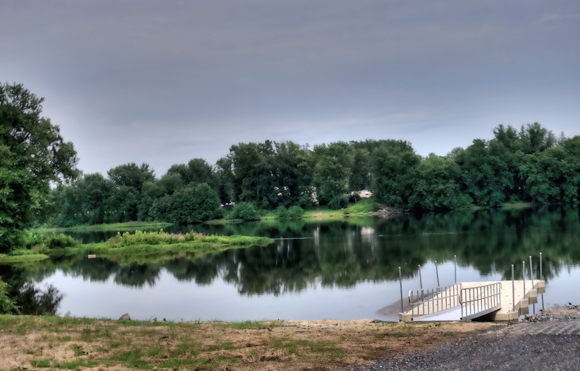
Bucknell Landing is a canoe and kayak launch on the West Branch of the Susquehanna River.
]]>
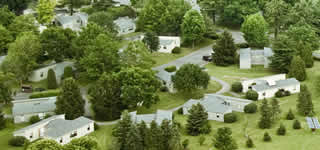
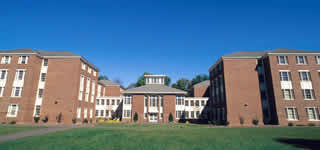
Bucknell West, a complex of residential units on the western edge of the campus, provides accommodations for 272 upper-class students. Each H-shaped unit has two wings, each of which contains two bedrooms, a bath, and a combination living room-kitchen. The complex is accessible via a pedestrian underpass, completed in 1991.
]]>
This residence hall provides Residential College housing for upper class students.
]]>
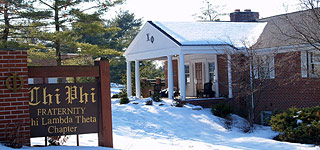
The mission of Chi Phi is to build better men through lifelong friendships, leadership opportunities, and character development.
]]>
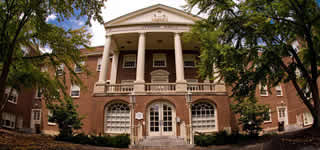
The climbing wall features over 1200 square feet of indoor climbing. Located in the southwest corner of Gerhard Fieldhouse, "the wall" measures 22' tall and 32' wide and features a wide array of bouldering and lead routes.
]]>
Affinity Housing that provides a venue for political discourse and investigation. An equal number of liberal and conservative students live together as they explore the issues facing the U.S. and the world.
]]>
The Elaine Langone Center contains the student post office; offices for student life and student government; study, game, and lounge rooms; facilities for lectures, performances, and meetings; the Samek Art Gallery; and dining facilities.
]]>
Fran's House: a residence honoring the late director of the Office of LGBT Awareness, Fran McDaniel. At Fran's House, students find a safe, welcoming, gender-neutral environment.
]]>
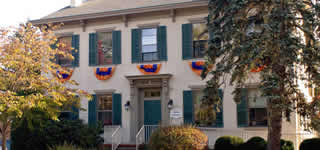
Completed in 1986, these five buildings - Roser Hall, Malesardi Hall, Kalman-Posner Hall, Vidinghoff Hall, and Silbermann Hall - accommodate a total of 250 upperclass students. Each floor contains four suites for four students each.
]]>
The John Howard Harris Hall provides housing for first-year students.
]]>
A home-base for rehearsals, artistic collaboration and cast meetings among students studying theatre. Participants produce mini-performances, workshops and other engaging activities for the Bucknell community.
]]>
Hunt Hall, built in 1928, which houses some 150 students, is named in honor of former president Emory W. Hunt, and provides private residence rooms and common facilities for Bucknell's sororities.
]]>
Housing for members of the Kappa Delta Rho Fraternity.
]]>
Kress Hall, an upperclass residence hall, is named in honor of Rush H. Kress, Class of 1900, for 36 years a trustee of the University and a generous contributor to his alma mater.
]]>
Founded in 1909, Lambda Chi Alpha has a mission to inspire the highest level of character, values, scholarship, and service in each of its members.
]]>
Larison Hall, renovated in 1995, is a large residential building connected on the west with Larison Cottage and on the south with Harris Hall. Together they accommodate 275 residents.
]]>
A base for intercultural exchange and the hub of international student life at Bucknell. Residents explore topics within international relations and world cultures in the context of a diverse, multinational and multicultural community.
]]>
The social hub of South Campus, MacDonald Commons offers students numerous engagement opportunities, including a multipurpose room, lounges and an a la carte restaurant.
]]>
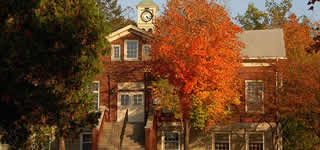
The Maker-E is a creative space for learning about and working on electronics, programming, and similar projects. Located in room 111 of Dana Engineering, this MakerSpace is open to all students, faculty and staff throughout the academic year.
]]>
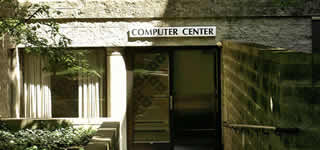
Martin House is a residence hall
]]>
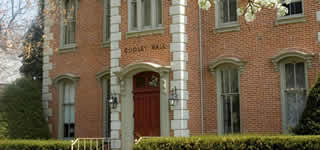
McDonnell Hall offers mixed class housing by floors including Foundation Seminars and Residential Colleges for first-year students.
]]>
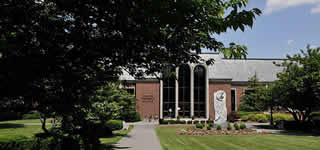
The Mooney Lab is a 2,200-square-foot space in the basement of the Dana Engineering building that includes a large project development area, laser cutter, design studio and manufacturing space for welding, grinding and brazing.
]]>
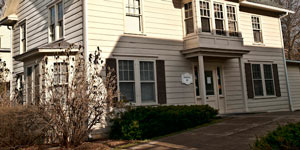
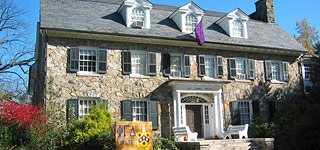
Founded in 1848, Phi Gamma Delta exists to promote lifelong friendships, to reaffirm high ethical standards and values, and to foster personal development in the pursuit of excellence.
]]>
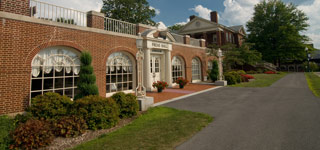
Roberts Hall is being renovated December 2015 - August 2016
]]>
Student Housing
]]>
Seventh Street House is the African American and Caribbean Studies House.
]]>
Opened in 2017, the affinity house at 75 Strohecker Farm Lane provides lodging for members of the Sigma Alpha Epsilon Fraternity in 26 single-occupancy rooms. The building is LEED Silver certified for sustainable design and resource efficiency.
]]>
Founded in 1854, the mission of the Sigma Chi Fraternity is to promote friendship, justice, and learning as the exemplification of our brotherhood and to inspire a lifelong commitment to serve well our families, friends, and the communities in which we live and work.
]]>
Sigma Phi Epsilon was founded in 1901 on three principles: Virtue, Diligence, and Brotherly Love.
]]>
Completed in 1986, this modern residential unit houses approximately 220 students in a three-story building that contains a wide array of common facilities, including seminar and study rooms, computer facilities, TV lounges, and common kitchen and laundry facilities.
]]>
The South Campus Apartments offer independent-style living and programming for juniors and seniors.
]]>
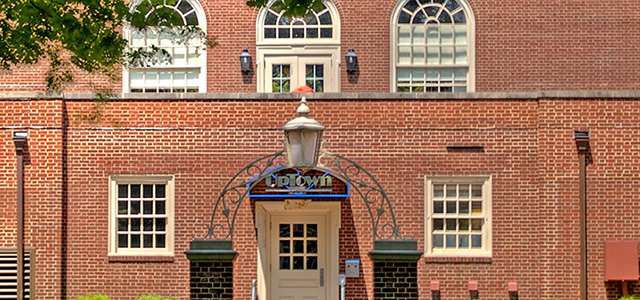
Swartz Residence Hall houses both upperclassmen and first-year students. The basement of Swartz Hall houses Uptown, a non-alcoholic nightclub for Bucknell students.
]]>
Sustainable Cooperative: a residence for students who want to reduce waste and live green. Students explore the innovations, challenges and rewards of sustainable living.
]]>
Trax Hall, built in 1907, is named for a trustee and benefactor, Harland A. Trax. Most rooms in this residence hall are singles.
]]>
Uptown is an on campus, student-run event venue that aims to provide a fun and safe environment where all students can find entertainment ranging from Karaoke nights to themed registers.
]]>
Vedder Hall, completed in 1965, is named in honor of Lee N. and Grace Q. Vedder, in recognition of the transfer to the University of the assets of the foundation which they endowed. It is home to over 350 residents, most of whom live in double rooms. The office of Residential Education can be found on the first floor.
]]>
Ward Guest House and guest suites, if applicable, are available to departmental guests of the University who otherwise would be housed, at University expense, in local hotels or motels, for short term accommodations. This is scheduled through the Events Management office.
]]>
Office of Alumni Relations
]]>
The Ellen Clarke Bertrand Library (built in 1951) is the center of information services for the campus. Located in one of the landmark buildings at Bucknell, the library is a leader among peer institutions in providing access to print and digital information. The Information Commons on the first floor provides students with one location to get assistance. The library also houses the Teaching & Learning Center, The Office of Civic Engagement and the Digital Communications Center.
]]>
The Botany Building was renovated in 1992 for use by the Career Development Center. In 2013 the Office of International Education moved the ground floor.
]]>
The Bucknell University bookstore, which occupies the former C. Dreisbach's Sons Hardware Store on the northwest corner of Fourth and Market streets, includes a large inventory of books, magazines and sportswear, as well as a Starbucks café. Its regular hours are 9 a.m. to 9 p.m. Monday through Saturday and noon to 5 p.m. on Sundays.
]]>
The Bucknell Center for Sustainability and the Environment (BSCE) supports faculty, staff, and students dedicated to environmental and nature-related learning, teaching, scholarship, service, and action at local, regional, national, and international levels.
]]>
Bucknell Hall, dedicated in 1886, was renovated in 1988 for use as a poetry center and recital hall. It houses the Stadler Center for Poetry, named for benefactors Jack Stadler ('40) and his wife, Ralynn.
]]>
Attached to the Dana Engineering Building is the Computer Center, (built in 1980) which serves as the network and telecommunications hub for the campus. Every student living on campus has easy access to a high-speed connection to the campus network and the Internet. Laptops may connect to the wireless network that is available across much of the campus, creating an environment of "any time, any place access."
]]>
Cooley Hall is home to Human Resources and several groups from the Finance Office, including the Endowment Office and General Accounting.
]]>
The Downtown University Office Building houses the Lewisburg post office retail center and a portion of the department of University Advancement including Annual Giving, Major Gifts, and Planned Giving.
]]>
The Elaine Langone Center, which opened in 1971, contains the student post office; study, game and lounge rooms; offices for student life and student government; facilities for lectures, performances, and meetings; art gallery; and dining facilities, including a snack bar and the refectory, a served dining room.
]]>
Provides financial aid assistance and information
]]>
Elizabeth Koons Freas Hall was given to Bucknell in 1965 by the late A. Guy Freas, a trustee of the university, in honor of his wife. Connecting Coleman Hall with Marts Hall, it houses the admissions offices.
]]>
The Walter C. Geiger Physical Plant Building, constructed in 1938 between Tustin and the Power Plant, was named for Walter C. Geiger '34, who served as superintendent of buildings from 1946-1957 and physical plant director from 1957-1978. It houses the physical plant offices, garages for utility service vehicles, several trade shops, and a small storage area.
]]>
Judd House (79 University Avenue) contains the office of the Vice President for Communications & Community Relations as well as part of the Division of Communications.
]]>
Sponsored Projects is located in Lowry House, one of the historic buildings on campus. The home was built in 1856 by The Reverend Joseph P. Tustin, then secretary of the Board of Trustees. Robert Lowry wrote some of his most famous hymns during his residence in the house from 1869-1875.
]]>
Marts Hall, built in 1960, houses administrative offices as well as departments of instruction. Arnaud C. Marts, for whom it is named, was the university's seventh president and a member of the Board of Trustees.
]]>
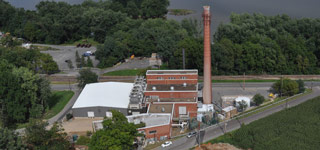
The campus power plant and warehouse.
]]>
Housing for the President of Bucknell University.
]]>
Provides procurement services to the university community to promote Bucknell's mission.
]]>
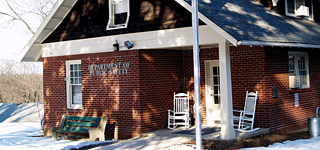
The office of Public Safety ensures a safe environment for Bucknell's students, faculty, and staff.
]]>
Roberts Hall is being renovated December 2015 - August 2016
]]>
Stephen W. Taylor Hall, named in honor of the author of the University's charter, was erected in 1849 as the first building on College Hill. In 1994, Taylor Hall was renovated for use by the School of Management and the Bucknell University Press.
]]>
Vedder Hall, completed in 1965, is named in honor of Lee N. and Grace Q. Vedder, in recognition of the transfer to the University of the assets of the foundation which they endowed. It is home to over 350 residents, most of whom live in double rooms. The office of Residential Education can be found on the first floor.
]]>
]]>
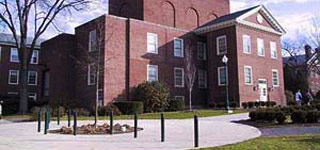
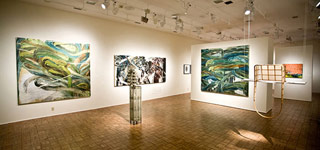
The 7th Street Studio is a creative workspace open to students, faculty and staff throughout the academic year. It consists of a Studio as well as a MakerSpace annex. Together, these two areas are equipped with a wide range of traditional and modern tools.
]]>
The Art Barn, a converted dairy barn on the west campus, provides more than 10,000 square feet of classrooms and workshop space for Bucknell students.
]]>
The Art Building, built in 1890, provides classrooms and studios for art students.
]]>
Bucknell Hall, dedicated in 1886, was renovated in 1988 for use as a poetry center and recital hall. It houses the Stadler Center for Poetry, named for benefactors Jack Stadler ('40) and his wife, Ralynn.
]]>
Opened in 1941 and one of only a few remaining active art deco theaters, the Campus Theatre shows contemporary films, hosts various festivals, and provides a unique setting for classroom video showings. Visit the Campus Theatre web site for showtimes and more information.
]]>
The Downtown Art Gallery, an affiliate of the Samek Art Gallery, brings together students, community members, and the best art of our time in a unique learning lab for everyone. The gallery is located at 416 Market Street, across from the Campus Theatre.
]]>
The Harvey Powers Theatre was originally constructed in 1959, and dedicated to Harvey Powers Junior in 1997. The space boasts some of the best facilities and technology in academic theatre anywhere in the country.
]]>
The Mooney Lab is a 2,200-square-foot space in the basement of the Dana Engineering building that includes a large project development area, laser cutter, design studio and manufacturing space for welding, grinding and brazing.
]]>
Located on the top floor of the Langone Center, the Samek Art Gallery serves the students, the university community and region through innovative exhibitions and programming that focuses primarily on the art of our time; organizes diverse and interdisciplinary programming of noteworthy art, artists, scholars and critics from around the US and the globe, and is open to the public seven days a week during the academic year, with the exceptions of university recesses and between exhibitions. Exhibitions and programming are free and open to the public.
]]>
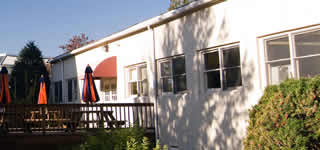
The Seventh Street Cafe, built in 1948 as a student recreation center with a snack bar called The Bison, later served as a psychology lab, a biology lab, and a piano lab until 1993, when it was renovated and renamed. The building, which includes exterior and interior student lounge areas and a coffee bar, hosts open mike poetry readings, and is home to the Craft Center.
]]>
The Sigfried Weis Music Building, located next to the Weis Center for the Performing Arts, was completed in fall 2000 and houses classrooms, faculty offices, a computerized keyboard lab, practice rooms, a music library, and a 176-seat recital hall. It is named for Sigfried Weis, former chairman of the Bucknell Board of Trustees.
]]>
The 450-seat Leanne Freas Trout Auditorium in the Vaughan Literature Building was recently restored to its original grandeur. In 2003 it was dedicated in honor of Leanne Freas Trout, Class of 1950, for the years of loyalty, service, time and leadership she and her family have devoted to Bucknell.
]]>
The Tustin Building, which was used for many years as a gymnasium, is named in honor of Francis W. Tustin, Class of 1856, who later became a member of the faculty. Dedicated in 1890, the building was completely remodeled and equipped in 1938, and in 1961 a wing was added. Tustin is used for academic and extracurricular programs. In 1986 the flexible black box Tustin Studio Theatre was opened.
]]>
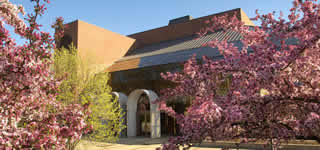
Completed in 1988, the Sigmund and Claire Weis Center for the Performing Arts, a concert hall with seating for 1300, is located west of the academic quadrangle at the entrance to the campus, opposite Rooke Chapel.
]]>
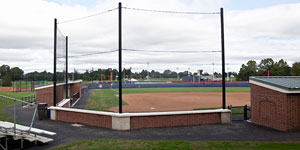
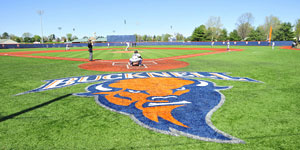
Located at West Fields, Becker Field is the competition venue for the Bucknell softball team. Adjacent to Depew Field, Becker Field is a fenced complex that contains a natural grass outfield with a manicured infield.
]]>
Bison Bikes is a free, community based, bike-sharing program and learning lab, aimed at providing an alternative mode of transportation for the Bucknell undergraduate community, limiting the environmental impact of student transportation, and increasing the availability of transportation on campus.
]]>
Bucknell Landing is a canoe and kayak launch on the West Branch of the Susquehanna River.
]]>
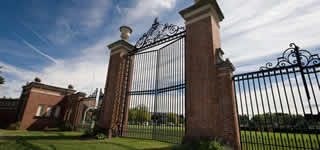
The Christy Mathewson Gateway was erected in 1928 and presented to the university by organized baseball in memory of the Hall of Fame pitcher, Christy Mathewson.
]]>
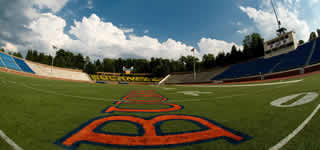
The Christy Mathewson-Memorial Stadium seats about 13,000 people and includes an eight-lane, all-weather track. A gift of alumni and friends of the university, it was dedicated in 1924 to the memory of Bucknell men and women who served their country in times of war. After its renovation in 1989, it was renamed to honor Christy Mathewson, a member of the class of 1902.
]]>
The climbing wall features over 1200 square feet of indoor climbing. Located in the southwest corner of Gerhard Fieldhouse, "the wall" measures 22' tall and 32' wide and features a wide array of bouldering and lead routes.
]]>
The Recreational Sports Complex includes Athletics Department Offices, the Fieldhouse, Davis Gym, and the Kinney Natatorium. This facility provides space for intramural and recreational activities, including track, tennis, volleyball, basketball, racquetball, squash, wrestling, a dance studio, and extensive Nautilus and free weight equipment.
]]>
Located across Route 15 from the main Bucknell University campus at the West Fields complex, Eugene B. Depew Field was formally dedicated on April 17, 2003. Depew, who is a 1971 Bucknell graduate, was named the Bison baseball coach in 1982. The longest-tenured baseball coach in Bucknell history, Depew participated on and served as a co-captain of the football team and later served as an assistant football coach prior to becoming the baseball mentor.
]]>
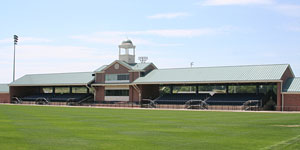
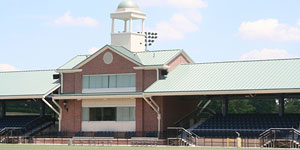
Emmitt Field at Holmes Stadium is one of the newest facilities for the Bucknell Department of Athletics and Recreation, and it provides the Bison men's and women's soccer programs with one of the finest soccer-only venues in the country. The natural grass pitch was completed in 2005 with the remainder of the stadium and grandstand finished in 2007. Located adjacent to the previous field at West Fields, and directly next to Graham Field, the facility has a natural grass surface with a state-of-the-art irrigation system. The field is also lighted, enabling the Bison to play games and practice at night.
]]>
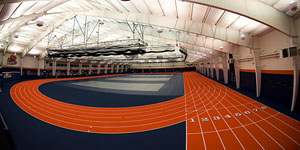
Gerhard Fieldhouse serves as Bucknell's indoor track and field facility. Entirely renovated in 1995, the Bison boast one of the finest indoor tracks in the East. The main floor of the fieldhouse includes a 200-meter track; courts for basketball, tennis and volleyball; and facilities for field events. The two-and-one-half acre building also includes five racquetball courts, four squash courts, a climbing wall, a dance studio and aerobics room, locker rooms, saunas, athletic training areas, a classroom, offices, two lounges and the Bucknell Athletics Hall of Fame.
]]>
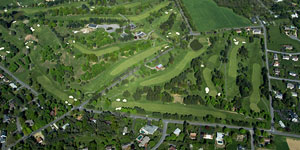
The Bucknell Golf Course, which opened in 1930, is located on the west side of Route 15, adjacent to the West Fields complex on Smoketown Road. The 18-hole course is open to the public. For more information on playing the course, please call 570-523-8193.
]]>
On September 21, 2003, Bucknell University dedicated a new synthetic turf field for its field hockey and women's lacrosse teams. Named in honor of lead donor William Graham '62, the artificial turf facility, Graham Field, located at the West Fields complex, provides a state-of-the-art playing surface. In addition to serving as the home of both the Bucknell field hockey and women's lacrosse teams, Graham Field also houses additional athletic practices, intramural contests and recreation activities.
]]>
The $32 million recreation and athletics center is named for lead donors Kenneth G. Langone, Class of 1957, and his wife Elaine. The Krebs Fitness Center and Kinney Natatorium, an Olympic-size pool, were the first sectors of the center to be completed. The Sojka Pavilion, Bucknell's 4,000-seat athletic arena named for biology professor and former president Gary A. Sojka, was dedicated on Jan. 15, 2003.
]]>
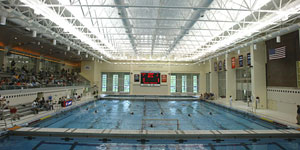
Kinney Natatorium, which opened in October 2002, houses the swimming and diving and men's and women's water polo programs for Bucknell. The multi-purpose facility is a state-of-the-art venue that features a 50-meter by 25-yard Olympic class pool and also enhances the recreational aquatics opportunities for the Bucknell communities. The pool itself features two moveable bulkheads, allowing for multiple team practices and recreational swimming to occur simultaneously.
]]>
The Bucknell University Small Business Development Center in downtown Lewisburg at 416 Market St., next to Elizabeth's Restaurant. It provides free and confidential consulting to entrepreneurs and small businesses in Juniata, Perry, Snyder, Union, Northumberland, and Montour counties.
]]>
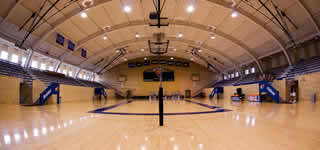
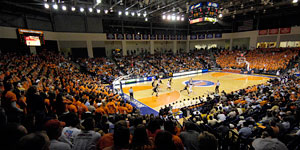
Part of the $32 million Kenneth Langone Athletics and Recreation Center, Sojka Pavilion is a 4,000-seat athletic arena named for biology professor and former president Gary A. Sojka. The facility was dedicated on Jan. 15, 2003.
]]>
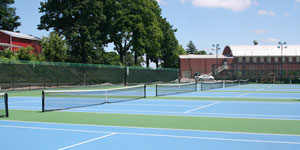
Located behind Gerhard Fieldhouse, the varsity tennis courts are the competition venue for the Bison men's and women's tennis teams. There are a total of 10 courts available for competition. When not in use by the tennis program, recreational users may play on the lighted courts.
]]>
The Library Café offers a variety of Starbucks blends, along with espresso, lattes, and iced coffee drinks and we'll prepare hot Tazo Chai tea. We offer a variety of fresh squeezed juices, bottled sodas, juices and specialty drinks. Our guest can also enjoy fresh baked muffins, biscotti, cinnamon roll, Danish or other assorted pastry from our Wheatcroft's Bakery. They can also select their favorite panini, wrap, foccacia, grab-n-go sandwich, sushi or salad.
]]>
All-you-care-to-eat continuous dining inside the Elaine Langone Center on the first floor. Monday - Friday 6 a.m. - midnight Saturday - Sunday 8 a.m. - midnight
]]>
The Elaine Langone Center contains the student post office; offices for student life and student government; study, game, and lounge rooms; facilities for lectures, performances, and meetings; the Samek Art Gallery; and dining facilities.
]]>
Late Night Friday and Saturday, Midnight-3 a.m. on St George St. near the Ward House
]]>
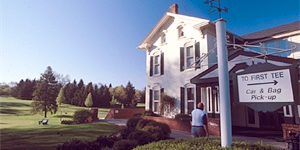
Knickers is the Dining Room at Bucknell Golf Club and is open during the golf season for breakfast and lunch to both the general public and all Club members. Diners are welcome to eat in the casual dining room or enjoy the ou tdoor tables overlooking the first and tenth tees.
]]>
The Seventh Street Cafe, built in 1948 as a student recreation center with a snack bar called The Bison, later served as a psychology lab, a biology lab, and a piano lab until 1993, when it was renovated and renamed. The building, which includes exterior and interior student lounge areas and a coffee bar, hosts open mike poetry readings, and is home to the Craft Center.
]]>
Located on the ground floor of the Langone Center, the Bison Café offers breakfast, hot and cold sandwiches, pizza, soups, salads, and more. Both indoor and outdoor seating are available.
]]>
Daily specials and menu items you can't find anywhere else on campus!
]]>
The Refectory is located on the second floor of the Langone Center. Guests will experience the Refectory's daily featured Chef's Creation, along with a variety of other options, with focus on the wellness and healthy presentation and preparation of the food. On Fridays, a Taste of the Seasons special buffet is available. Food will be prepared using fresh items that are in season.
]]>
Located on the second floor of the Langone Center, the Terrace Room offers deli options, soups, a salad bar, and select traditional hot foods.
]]>
This building houses the Center for Jewish Life on campus.
]]>
The Fellowship House (628 St. George Street) provides programming space for Protestant ministry on the first floor, and an Interfaith Meditation Space and activities room on the second floor.
]]>
Spiritual and educational center for Catholic students and residence for the full time campus minister.
]]>
The Charles M. and Olive S. Rooke Chapel seats 500 on the main floor and 250 in the balconies. In addition to the chaplain's offices, the south wing houses a reception room and a meditation chapel. The chapel was given to the university in 1964 by Robert L. Rooke, Class of 1913, secretary emeritus of the Board of trustees, in memory of his parents.
]]>
Moore Ave., Seventh St., Walker St., Loomis St., St. George St. and University Ave. are public streets on campus and, as such, available for visitor and all decal parking. Please contact the Department of Public Safety for official parking zones and more information.
]]>
Visitor parking is available at the northern end of Christy Mathewson Drive, near the Dent Drive intersection. Please refer to the Department of Public Safety's parking map for official parking zones and more information.
]]>
Moore Ave., Seventh St., Walker St., Loomis St., St. George St. and University Ave. are public streets on campus and, as such, available for visitor and all decal parking. Please contact the Department of Public Safety for official parking zones and more information.
]]>
Moore Ave., Seventh St., Walker St., Loomis St., St. George St. and University Ave. are public streets on campus and, as such, available for visitor and all decal parking. Please contact the Department of Public Safety for official parking zones and more information.
]]>
Moore Ave., Seventh St., Walker St., Loomis St., St. George St. and University Ave. are public streets on campus and, as such, available for visitor and all decal parking. Please contact the Department of Public Safety for official parking zones and more information.
]]>
Moore Ave., Seventh St., Walker St., Loomis St., St. George St. and University Ave. are public streets on campus and, as such, available for visitor and all decal parking. Please refer to the Department of Public Safety's parking map for official parking zones and more information.
]]>
Moore Ave., Seventh St., Walker St., Loomis St., St. George St. and University Ave. are public streets on campus and, as such, available for visitor and all decal parking. Please contact the Department of Public Safety for official parking zones and more information.
]]>